


Running Headquarters  Frontpage
Injuries and Treatment  Injuries
Nutrition Information  Nutrition
Running Training Information  Training
Running Information Forums  Forums

   Running Information      USA Running      Running South Africa      Running New Zealand      Running UK      Running Ireland      Running Ireland      Deutsch Laufzeit      Copenhagen Marathon      Suomen Juoksu      Sverige Löpning      Tel Aviv Marathon      Running Australia      Running Kenya      Running Europe      Running Namibia

Minimise impact to reduce injury risk

Minimise Impact Reduce Injury

Minimise Impact Reduce Injury

Injuries are the pits. The physical part is bad enough, but mentally they can be even worse. Half of your brain rationally advises caution while the other half screams, “Get out the door!” [Read more...]

Rice for Injury Treatment

RICE

RICE

Rest; Ice; Compression; Elevation [Read more...]

How to regain your fitness

How to regain your fitness after injury or illness

How to regain your fitness

How to regain your fitness

The quickest way to get your fitness back after a lay-off is to find a three-minute hill.

Let’s say that things are going really well with your training. You’re steadily getting fitter and racing faster as you get ready for that big race in a couple of months. But then – disaster strikes! Your Achilles tendon flares up, or you develop a monstrous case of the flu, or work pressures get out of control. Whatever the reason, you can’t train at all for a couple of weeks, and when you start working out again, there are only two to three weeks left before your key competition [Read more...]

Recurrent Hamstring injuries

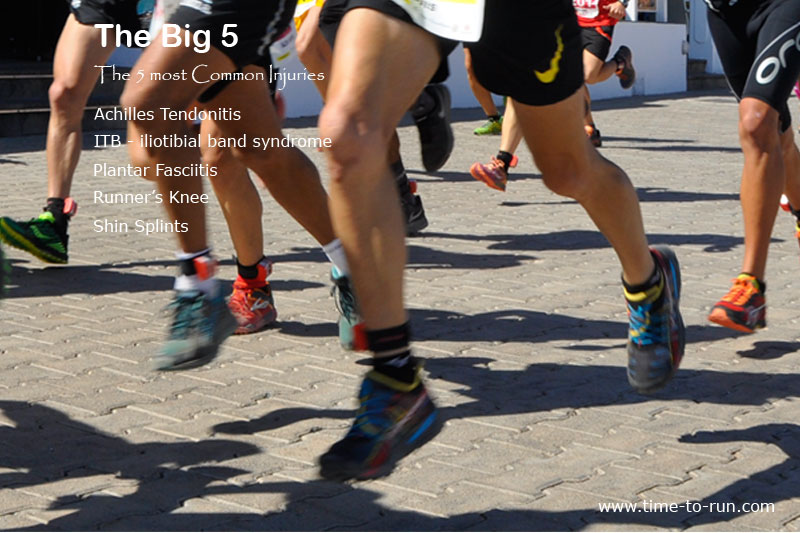
Teri Burgess - Physiotherapy ContributorThis article is provided by Teri Burgess, resident Physiotherapist from Time-to-Run Cape Town, covering Recurrent Hamstring injuries. Teri is also the contributor of the hugely popular article, covering the 5 most common running injuries, aptly named The BIG Five.

Picture it… you’re gliding up your favourite long hill, breathing well, legs feeling strong. You reach the top, and happily you start running downhill. Everything is perfect: it is a beautiful morning, that hill has never felt easier, and you are even sweating less than usual. Suddenly it all changes in one simple step. You feel a sharp pulling pain in the back of your thigh, and you are reduced to a hobble – all the way home. While you do contemplate throwing your running shoes away, you are also puzzled. You can’t think of anything you have done incorrectly to cause this injury. You have been increasing your training gradually, without doing any major speed or hill sessions. You have even been stretching a bit, and certainly felt no niggling pain or stiffness in the muscle up until now. Then you remember that this hamstring gave you problems last year, and the year before, also without warning. [Read more...]

Treatment of recurrent hamstring strains

Treatment of Recurrent Hamstring Strains

Treatment of Recurrent Hamstring Strains

Injuries to the hamstrings are the most common soft tissue injuries to the thigh. Symptoms of a hamstring strain include pain, muscle spasm, swelling, and inhibition of movement.

Treatment of acute injury

  • stop running, especially in the case of severe pain
  • if pain is mild, then reduce training load and intensity, and avoid running on cambered surfaces
  • take a course (5 – 7 days) of non-steroidal anti-inflammatory drugs (ibuprofen/voltaren/cataflam/mobic) available from your general practitioner or pharmacist
  • apply ice to the hamstrings – for 10 minutes every 2 hours, in order to reduce the inflammation
  • self-massage, using arnica oil or an anti-inflammatory gel, to the hamstrings
  • stretching of the hamstrings.

[Read more...]

The Gift of an Injury

In this article I want to discuss the idea that an injury, if it is treated and acted on in the right way, can actually be a gift to runners. Some of you may wonder how one can possibly see an injury as a gift, when being injured can be the most annoying, and sometimes depressing, part of an athlete’s life, so let me explain.

Stretch wallI would never wish an injury on any athlete, especially not what I call a ‘serious accident’ injury such as a bone fracture or ligament rupture. Yet injuries are a reality for most athletes and so it is wise to learn to look at them in a positive way and see them as an opportunity to learn about your body.

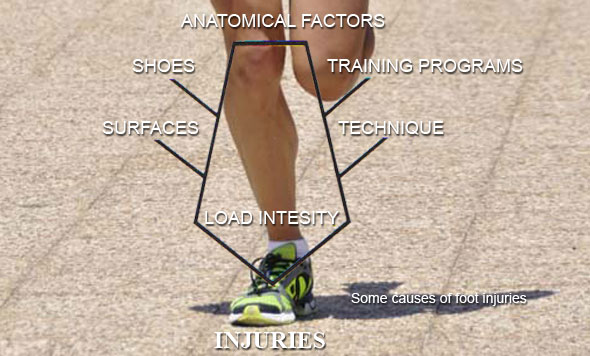
How on earth can we look at injuries positively? All injuries have causes, but these causes can be many and various: they could be related to the training programme, the athlete’s technique, the athlete’s level of conditioning, the equipment used or the conditions. By identifying the specific causes you can make an objective assessment of what you need to do to ensure the injury does not recur. Then, by working on your weaknesses and making any changes to training or equipment once the injury has healed, you will be a stronger, better prepared athlete who has less chance of getting injured again. This is how injury can be a gift, because it offers an opportunity to discover what you need to work on and a chance to become more aware of your body. [Read more...]

Injury Treatment Approaches – Your Approach to Treatment

It is a major challenge to discuss in detail the nature and treatment of all running injuries. Knowing the cause and providing detailed information regarding the treatment Treatmnentof injuries is always made more difficult without being able to analyse the symptoms. In our approach we will attempt to provide you with sufficient tips to consider the extent of your injury and what course of action to take next. To train intelligently is always the best approach however being sensible at all times is often something which gets ignored and often injuries do occur. Often catching an injury early and treating it with the basic guidelines listed below can avoid the injury becoming chronic. [Read more...]

Leg and Foot Cramps

Many runners have had the experience of having a peaceful night of sleep interrupted suddenly and without warning by a severe cramp in some part of their leg or foot, and to make matters worse there is often residual pain even after the cramping has disappeared. Although these Leg Crampscramps happen to people of all ages, two-thirds of those over age 65 have them at one time or another.

Possible reasons for leg/foot cramps may be: poor circulation, lack of enough salt, dehydration, abnormal mineral or hormone levels, pinched nerves, alcohol or tobacco use, partially-obstructed flow of blood to the legs, nutritional deficiency, environmental toxicity or chemical sensitivity.

As people age, leg cramps become fairly common and related to reduced activity, or muscle fatigue when the muscles don’t get enough blood supply. Getting moderate regular activity during the day, or stretching the muscles before bedtime, generally reduces the likelihood of cramps during the night, as well as wall pushups which stretch the calf muscles of the leg. [Read more...]

To reduce injury risk, you need to minimise impact

Injuries are the pits. The physical part is bad enough, but mentally they can be even worse. Half of your brain rationally advises caution while the other half screams, “Get out the door!”

Medical TreatmentTo control injuries, whilst you are in heavy training for a race like the Old Mutual Two Oceans Marathon, it’s not enough to just rest; you need to understand their root causes. Preventing injuries is about increasing the ability of your tissues to tolerate a force repeatedly, or decreasing the cumulative shock those tissues must withstand. I believe that most overuse syndromes will respond to rest, training modification and a change in the running surface or shoe. Rest is self-explanatory. Let’s look at how to prevent injuries by adjusting your running surface and terrain, shoes and mileage.

Our bodies didn’t evolve to withstand hundreds of kilometres of pounding on the hard, uniform surfaces of pavements and roads. Although these may be the most convenient surfaces available, you’re inviting shin splints, stress fractures and other injuries by training on them exclusively. A better strategy is to switch to softer surfaces such as dirt, grass or gravel as much as possible. If you are a Capetonian runs through Cecilia plantation to the “Nek” or Jack’s track in Newlands forest provide for a friendlier surface as well as a more variable ride, which reduces the repetitiveness of the load. [Read more...]

The best predictors of injury

Best Predictors of Injury

Best Predictors of Injury

If you’re a runner, the link between training quantity and injury means that total training mileage is an excellent indicator of your injury risk. The more km you accrue per week, the higher your chances of damage. One recent investigation found a marked upswing in injury risk above about 65 km of running per week. [Read more...]