



Previous research has found that even low levels of dehydration may impair high intensity exercise performance on hot days. Higher volumes of fluid replacement have proven advantageous for runners and cyclists under these conditions.
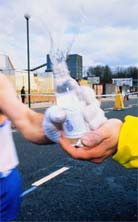 Even in cool weather (25C), athletes could lose 1-1.5 litres of sweat per hour.
The American College of Sports Medicine suggests that this fluid be replaced through “frequent (every 15 to 20 minutes) consumption of moderate (150 mL) to large (350 mL) volumes [of liquid] if possible”.
Most endurance athletes drink less than 170 mL every 20 minutes. This falls far short of the large volumes needed to replace sweat loss.
A recent study conducted at the UCT Sport Science institute put these guidelines to the test in order to establish if they were practical under moderate (25C) weather conditions, and whether or not any advantage.
The study found that consuming large 340 mL volumes of fluid caused great discomfort to most participants. Some athletes felt so bloated; they could not finish the trial.
The study concluded “it may not be possible for athletes to absorb sufficient fluid to maintain hydration during competitive running exercise.
The additional ingestion of fluid had no measurable effect on plasma volume and osmolality and did not improve 2 hour running performances in a 25C environment.”
Medicine and Science in Sport and Exercise Vol32 No. 10.pp 1783-1789, 2000.

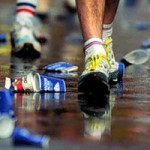



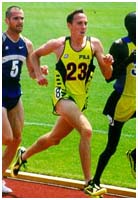
What were they drinking? Surely is possible to keep the right level of hydration by drinking the right things. Runners of long runs 3 and more hours won’t finish, or won’t finish at anything near performance levels if they don’t hydrate.