




Nutrition Group
The Food Guide Pyramid most people are familiar with the basic four food groups plan, findings revealed the shortcomings of the ‘basic four’ and was thus re-modeled to form the food guide pyramid. The food guide pyramid is easier for the general public to understand. A minimum amount of daily servings from each group is displayed as well as an example of the source of foods from each group. This approach to sound nutrition maintains the concept of the four food groups, emphasis however, is focused on grains, vegetables, and fruits as the basis of the diet.
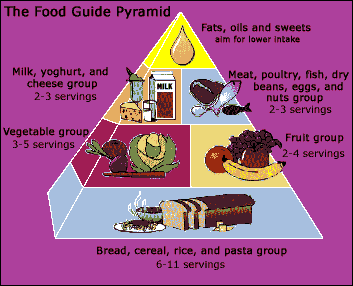
The Food Guide Pyramid
Carbohydrate-rich foods (the breads and cereals, group) form the foundation of the diet. The other food groups are shown according to their relative importance in a healthy diet, food sources high in animal protein, lipids, and dairy products are downplayed. In the pyramid a major change is shown by the splitting of the fruit and vegetable group into two distinct groups, each with their own daily serving recommendation. Serving size and the number of servings should be regulated according to growth needs, level of physical activity, and the maintenance of a wanted body weight. Fats form only the apex (tip) of the pyramid, this is to stress the importance that fats should make up a minimal amount of your daily calorie intake. Note that there is no minimum number of servings prescribed as people tend to consume far too much of this particular group. For further articles of interest :
- Omega Fatty Acids – a Hype or Help?
- Are carbohydrates of benefit during a race?
- What are carbohydrates?
- The Importance of Nutrition for Recovery
- Fluid and Electrolytes to support activity
- Food sources high in carbohydrates
- Fluid replacement during exercise in moderate temperatures
- Optimal nutrition for exercise
- Essential minerals – keep your body`s engine in tip top form
- The 10 Worst Foods You Can Eat
- Vitamins Explored
- Vitamin C and its suspected harmfulness explained
- How to calculate the Energy available from foods







Why fats are shown at the apex of food pyramid?
Hi Aishwarya, this is the original Food Pyramid to which a great amount of study and the tried and tested method was applied. Most athletes at the top level have used this over the years, when a new Food Pyramid is made available on a larger scale, then in all likelihood a different Food Pyramid will become the norm. Hope this helps in reply. TheEd