





Recommended Dietary Allowance (RDA) the amounts of selected nutrients considered adequate to meet the known nutrient needs of healthy people. The RDA are based on scientific knowledge and have been presented by a committee of the Food and Nutrition Board (FNB) of the National Academy of Sciences (NAS). The Canadian equivalent is the Recommended Nutrient Intakes. RDA is generally accepted throughout the world as a valid source of information. At least 40 different nations have as well as organisations have published standards similar to the RDA.
The table below serves as an example as to what is recommended as normal intake.
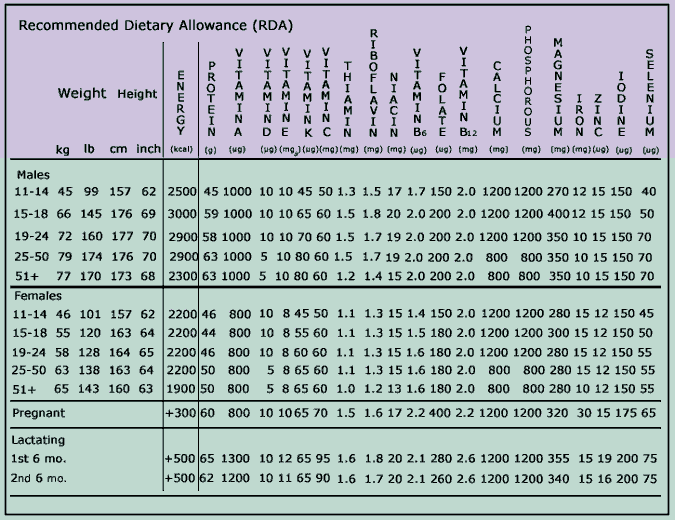
Recommended Dietary Allowance - RDA
Following will be a discussion of the specific aspects of RDA:
Energy RDA Each individuals food energy intake must equal the energy expended, in order for the person to maintain their body weight. The average energy consumption is aimed at setting a standard for people to work from and it gives an example of how many kcalories are reasonable for this group. An output side of the energy balance equation, how much energy people should expend, has not been established.
Protein RDA Protein recommendations are mainly based on the individuals body weight. The protein RDA is high, to cover most person’s needs. The average requirement for protein is 0.6 grams per kilogram of body weight; the RDA is 0.8 grams this is said to meet 97.5% of the population’s needs.
No RDA for Carbohydrate and Fat The amount of protein recommended represents a small percentage of a person’s energy allowance; with the remainder acquired from carbohydrates and fats. The general guideline for carbohydrate and fat is that more than half of daily energy should come from carbohydrates, with no more than one-third from fat.
Water Recommendation The larger and more active a person the greater the need for water. Most people need a least 6 to 8 eight-ounce glasses of liquids a day. This is truly an area neglected by most individuals.
Fiber recommendation There is no recommendation for fiber, however it is recommended that sufficient fiber be obtained from fruits, vegetables, legumes, and whole-grain products, which also provide vitamins, minerals and water.
The RDA for vitamins and minerals
The recommendations for vitamins and minerals are specific, as they have been studied for decades.
Predicting a minimal requirement These recommendations have been set on the basis of studies taken from healthy people involving the various states of depletion of their nutrient stores. From these studies an average is determined as to the body’s need for each nutrient, which is seen as an amount sufficient to maintain body processes. Neglecting these intakes can lead to deficiency symptoms.
Establishing a Generous Recommendation The average requirement for each nutrient is probably closest to most people’s need, however if all persons were to stick to the average we would probably have a situation where half the population would develop deficiencies of some sort. A person should not have an intake more than the average recommended as this may lead to a situation; if going above ‘upper safe’ level, where some nutrients can be toxic. Individuality is the key, however the tables are suffice for providing an example as to what the average nutrient intake should be, especially relating in terms of “safe and adequate” ranges, “safe” meaning “not too high” and “adequate” meaning “not too low“.
Upper safe: the amount that appears safe for most healthy people and beyond which people may experience toxicity symptoms
It must be noted that it is recommended, to the more ‘diligent’, individuals that they seek advice regarding there own individual needs relating to their own individual height, weight and their daily amount of energy expenditure (energy expenditure relating to daily training).