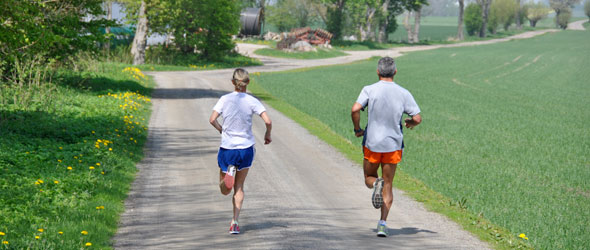


Welcome to the Running Training and Methods Information section

What is fartlek?
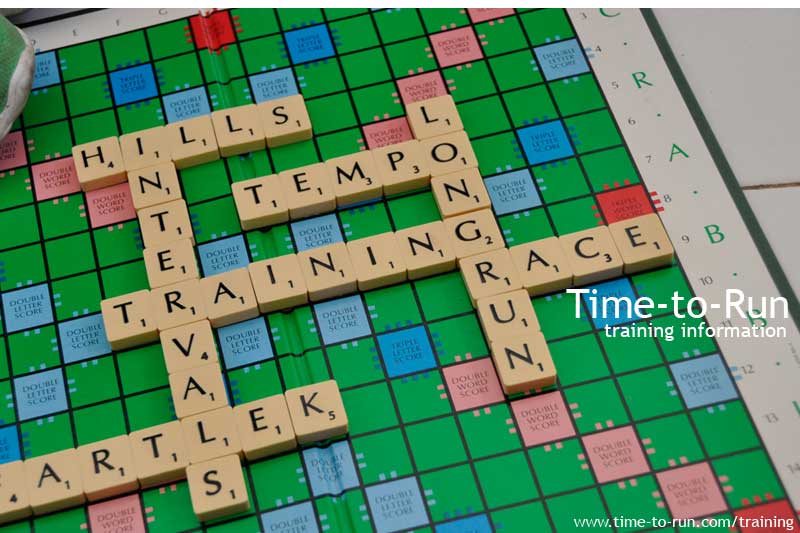
So what is Fartlek? – The word fartlek is a Swedish word that translates directly into “speed play”. Fartlek is a great way to develop endurance and strength as well as increase speed. Fartlek is a more systematic form of pace training.
A new 800 meter record 30 years later
A new 800m record – Our Time-to-Run training programs are time-oriented. The programs are aimed at improving your 10km times, but your times for other distances will no doubt improve.
Substitute some of your running training with skiing
Substitute running with skiing – Unfortunately, the winters in Southern Finland are what they are, and there is no guarantee that you will be able to ski.
Reduce training intensity during corona pandemic
The Importance of short-term goals
Applying short-term goals in your running training cycles – Everyone knows that setting yourself a goal is of great importance, however discussing and achieving short-term goals is in truth just as important.
Interval Training for Performance
LATEST POSTS
The Warning Signs of Overtraining
Sep 14, 2011 | Featured, Overtraining
Listed below are the warning signs of overtraining: In the Muscles Persistent soreness and stiffness in the muscles, joints and tendons. Heavy - leggedness. Emotional Symptoms Loss of interest in training. Nervousness - a heightened state Depression - humour is...
LATEST POSTS
Water running can be beneficial to athlete
Sep 14, 2011 | Articles, Water Running
Water running in the deep end of the pool is quite advantageous as an alternative workout for run training. There are a few reasons why I recommend water running in an athlete's training plan. One of the primary reasons is if the athlete has an injury that will not...
Training to improve Aerobic power utilising Heart Rate
Sep 14, 2011 | Heart Rate
Train at percentage HRmax It is generally accepted that, aerobic capacity is developed by exercising with your heart rate at about 70% of maximum. During walking, or running, this increase is equivalent to about 55% of the VO2 max or, for college aged men and women,...
INTERVAL TRAINING
No Results Found
The page you requested could not be found. Try refining your search, or use the navigation above to locate the post.
10K TRAINING
FARTLEK
No Results Found
The page you requested could not be found. Try refining your search, or use the navigation above to locate the post.
No Results Found
The page you requested could not be found. Try refining your search, or use the navigation above to locate the post.
Six Building Blocks of Distance Running Part 2
by timeadmin | Apr 15, 2011 | Articles, Featured
Six Building Blocks of Distance Running
by timeadmin | Apr 15, 2011 | Articles, Featured
Aim to trim down interval recoveries
by timeadmin | Apr 15, 2011 | Articles, Featured
HEARTRATE TRAINING
No Results Found
The page you requested could not be found. Try refining your search, or use the navigation above to locate the post.
NEWSFEED
Training towards a sub 35 minute 10K
sub 35 minute 10K program - Firstly, what must be understood is that in order for you to run sub 35 minutes for 10Km, you must be able to run below 3 minutes 30 seconds per kilometer for the distance. sub 35 minute 10K Training Program Introducing paced running to...
Aerobic Training
Aerobic training, also known as "base training," has been likened to the foundation of a building in its importance to developing fitness. No house could survive for long with a weak foundation and so it is with distance runners and aerobic training. The word aerobic...
METHODS
No Results Found
The page you requested could not be found. Try refining your search, or use the navigation above to locate the post.
The Build Up Period – 10K Training programs
Further information to make a success out of your 10k training programs. Please note, this Build Up is only recommended for those who have trained on the 10k training programs previously. Do not start with the Build Up if you have not trained on the programs The Build...
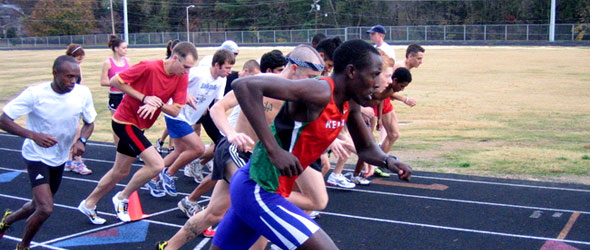
Understanding Intervals
Sep 14, 2011 | Articles, Featured, Intervals
Matching training characteristics to physiological changes Which is "better", Interval Training or Steady State Training? Obviously that is simplistically stated, but I will try to make things more clear as we go. Eight years ago, my master's thesis asked this exact...
No Results Found
The page you requested could not be found. Try refining your search, or use the navigation above to locate the post.
No Results Found
The page you requested could not be found. Try refining your search, or use the navigation above to locate the post.