





The Procedures of Massage
Sports Massage Procedures
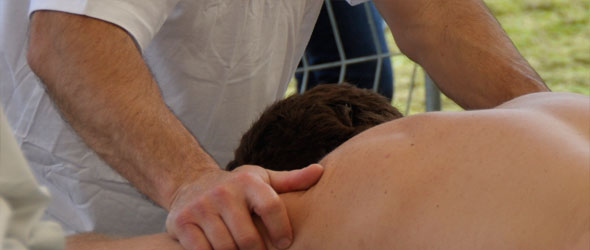
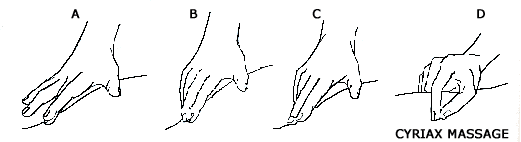
Primarily, massage is separated into five basic categories: effleurage, petrissage, friction, tapotement, and vibration. As well as Cyriax (deep transverse friction) and acupressure massage.
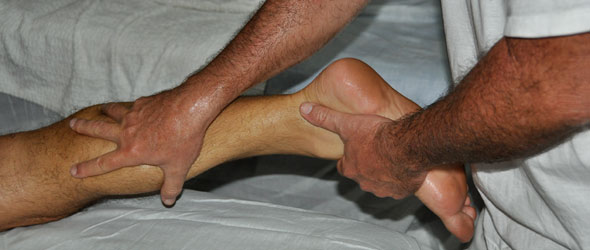
Effleurage Effleurage, or stroking, is divided into light and deep methods. Light stroking is designed primarily to be sedative. It is also used in the early stages of injury treatment. Deep stroking is a therapeutic compression of soft tissue, which encourages venous and lymphatic drainage. A different application of effleurage may be used for specific body part.
Stroking variations There are many variations in effleurage massage; some that are of particular value to sports injuries are pressure variations, the hand-over-hand method, and the cross-body method. Pressure variations range from very light to deep and vigorous stroking.
Light stroking, induces relaxation or is used on areas sensitive to touch; however deep massage is used to achieve a definite physiological response.Light and deep effleurage can be used alternately when both features are desired. The hand-over-stroking method is of special benefit to areas that are unyielding.
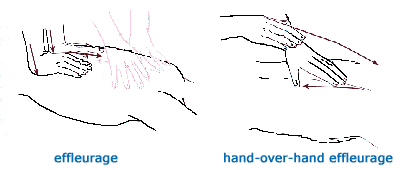
It is performed by an alternative stroke in which one hand strokes, followed immediately by the otherhand, somewhat like little stones rolling down a roof.The cross-body effleurage technique is an excellent massage for the lower back. The operator places a hand on each side of the athlete’s spine. Both hands first stroke simultaneously away from the spine, then both hands stroke towards the spine in unison.
Petrissage Kneading, or petrissage, is a techniqueadaptable primarily to loose and heavy tissue areas such as the trapezius (shoulder area?), the lassimusdorsi, or the triceps muscles.

The action is initiated by bracing with the heels of the hands, then either holding the thumbs steady and moving the fingers in circular motion. Each method is adaptable to the type of area or articulation that is being massaged. The motion is started at a central point, and then a circular movement is initiated, with the hands moving in opposite directions away from the center point.
The purpose is to stretch the underlying tissue, develop friction in the area and increase circulation around the joint.
Tapotement The most popular methods of tapotement, or percussion, are cupping, hacking, and tapotementpincerlike or pincing movements.

Cupping The cupping action produces an invigorating and stimulating sensation. It is a series of percussion movements rapidly duplicated at a constant tempo. One’s hands are cupped to such an extent that the beat emits a dull and hollow sound, unlike the sound of the slap of the open hand. The hands move alternately, from the wrist with the elbow flexed and the upper arm stabilized. The cupping action should be executed until the skin in the area develops a pinkish coloration.
Hacking Hacking can be used in conjunction with cupping to bring about a varied stimulation of the sensory nerves. It is similar to cupping, except the hands are rotated externally and the ulnar, or little finger, border of the hand is stroking the surface. Only the heavy muscle areas should be treated in this manner.
Pincing Although pincing is not in the strictest sense percussive, it is listed under tapotement because of the vigor with which it is applied. Alternating hands lift small amounts of tissue between the first finger and thumb in quick, gentle pinching movements.
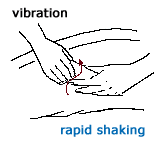 Vibration Vibration is rapid movement that produces a quivering or trembling effect. It is mainly used in sports for its ability to relax and soothe. Although vibration can be done manually, the machine vibrator is preferred.
Following on from this procedures for sports article see the data relating to Cyriax (deep transverse friction) and acupressure massage.
View the various articles related to Sports Massage :
- The Sports massage section
- Definition of massage by John Hooper
- Sports massage all the responses
- Procedures of Massage
- Cyriax and Acupressure
- Effective Massage
Disclaimer
Please note that Time-to-Run at all times recommends the use of professional sports masseurs, these notes are primarily to assist you in understanding the use and practice of massage and it’s various techniques. Applying any of these techniques by those not qualified to do so, is done at your own risk